COVID-19 vaccines make men impotent, result in a stroke or heart failure, cause permanent headaches and rashes, are not safe, contain 5G, have a microchip to track an individual, alter a person’s DNA, and so on…
We’ve probably all heard some of these myths and rumours that deter many people from becoming fully vaccinated against the killer disease.
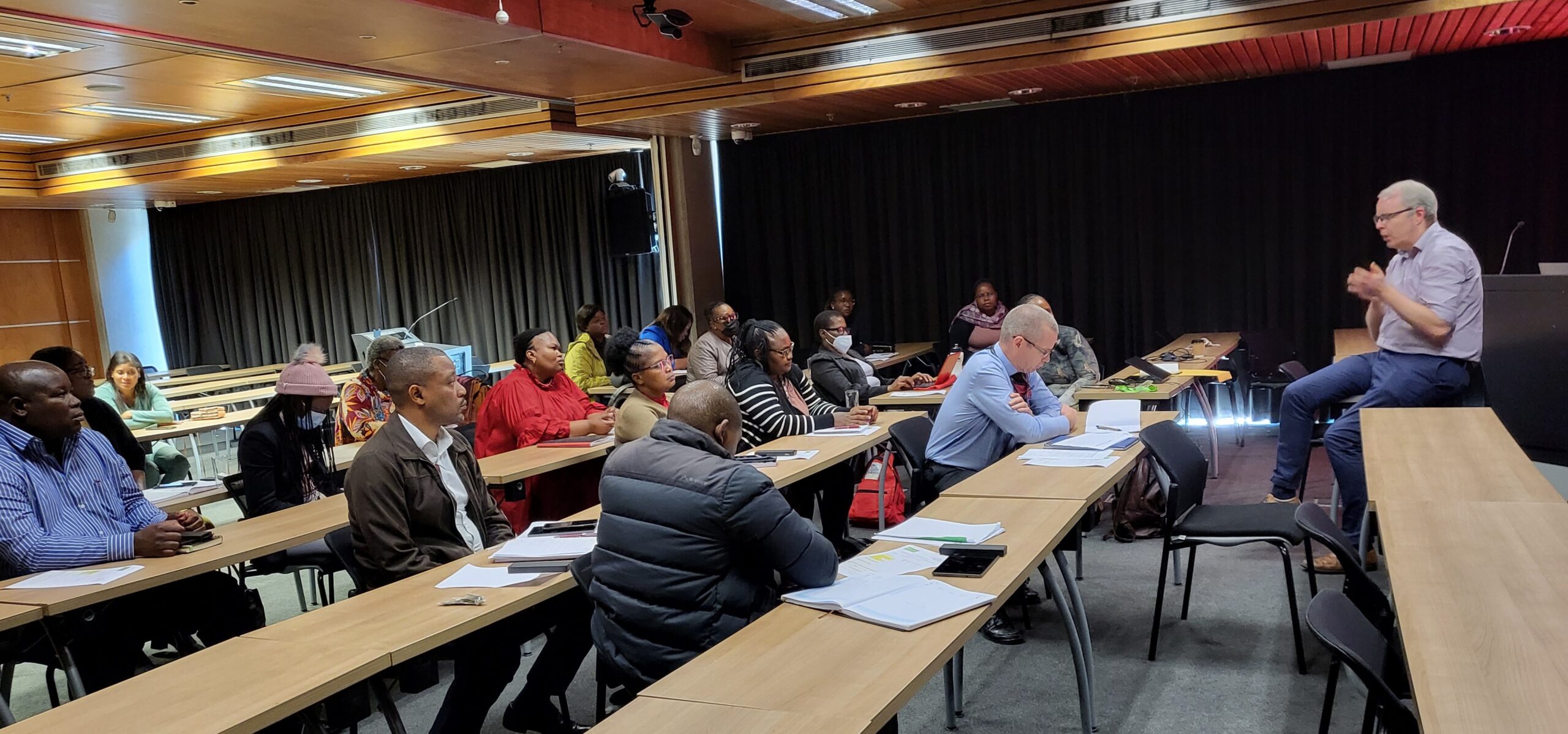
To help debunk the myths and surpass the 50.6% vaccine uptake rate in the country, UKZN’s College of Health Sciences (CHS) held a workshop to train primary healthcare district co-ordinators from the KwaZulu-Natal Department of Health on COVID-19 vaccine safety and efficacy. Presenters included Head of Virology at UKZN and the National Health Laboratory Services, Dr Nokukhanya Msomi, who said the emergency situation around the COVID-19 pandemic had warranted an emergency response prompting many pharmaceutical companies and governments to invest significant resources into quickly developing a vaccine.
‘Studies have indicated that the vaccines are safe with short-term mild reactions that resolve without complication,’ said Msomi. ‘It is also important to note that all the standard efficacy and safety evaluations usually conducted during the development of a vaccine were implemented. The only difference was that for the first time ever, simultaneous large-scale studies were conducted so large data sets were readily available and shortened the time of vaccine development,’ said Msomi.
Msomi also stressed the importance of basic prevention measures. ‘Given the fact that in South Africa we have lifted all restrictions, it is essential for people to take responsibility for their own health. Continue to self-isolate if you have flu symptoms or wear a mask if you’re interacting with other people. Clean your hands regularly, stay away from crowds and avoid poorly ventilated indoor spaces.’
Msomi said in the last two years, the compulsory wearing of masks had helped to reduce circulation of other respiratory viruses such as influenza.
Professor Nigel Garrett, Head of Vaccine and Pathogenesis Research at the Centre for the AIDS Programme of Research in South Africa (CAPRISA) and Honorary Associate Professor in Public Health at UKZN, said studies indicated that due to vaccinations, there had been fewer deaths and hospitalisations globally. ‘South Africa has had five waves of the virus thus far. Data suggests that in the first wave 12 584 sufferers were admitted to hospital, in the second wave 19 042, in the third wave 19 956, in the fourth wave 23 437, and 7 685 in the more recent fifth wave.
‘Unvaccinated people have a six times higher risk of dying and experiencing severe disease than those fully vaccinated,’ said Garrett.
As the National co-Principal Investigator of the Sisonke Programme, he said what was urgently needed in Africa were good surveillance systems. ‘Scientists estimated that in the first year of rolling out the vaccinations there were 63% less COVID-19 deaths globally. Many additional deaths could have been averted in low- and middle-income countries had COVAX met its 20% roll out rate.’
Garrett also mentioned a study conducted in Israel among those who received two doses of the Pfizer vaccine, which found that there was a 54% to 64% reduction in the four most common persistent long COVID-19 symptoms including fatigue, headaches, weakness and muscle pain. Garrett stressed that the community benefits of a fully vaccinated population should not be underestimated. ‘A study indicated that children with vaccinated parents were at a 72% lower risk of getting infected.’
Dr Richard Lessells, an Infectious Diseases Specialist at the KwaZulu-Natal Research and Innovation Sequencing Platform (KRISP) at UKZN, and an Honorary Research Associate at CAPRISA said there was a perception in the community that the vaccines were ineffective hence the need for additional shots. ‘No vaccine, due to the various variants, has become ineffective. We must remember that the vaccine protects against severe disease and death from any of the variants. The reason we encourage two or more doses, is that over time, the immune protection from the vaccine diminishes or wanes and hence additional shots are required to boost protection against severe illness and death.’
Said Dean of Research in the CHS Professor Anil Chuturgoon: ‘As healthcare workers you are our ambassadors and we want you to encourage members of the public to be vaccinated. Hence, we felt it would be good to address all your concerns and equip you with the facts around the vaccines so you can engage with your communities through awareness programmes and activities. Accurate vaccine information is critical. As scientists and clinicians, we know that getting a COVID-19 vaccination is a safer and more dependable way to build immunity to COVID-19 than getting sick with COVID-19 and developing severe illness.’