UKZN’s African Centre of Food Security (ACFS) has undertaken a consultative engagement process with ACFS staff, students, alumni, associates and experts in the field to seek input on its food and nutrition security strategy to refresh its efforts to remain at the forefront of food systems research at UKZN.
ACFS staff members and associates conferred with various internal and external stakeholders using carefully selected strategic models that fostered meaningful participation and collaboration.
The ACFS has a long history of teaching, research, and community engagement in food security and food systems, offering a focused coursework master’s programme and short courses that leverage its strength in transdisciplinary instruction and the development of cross-cutting modules equipping trainees with knowledge of the nuanced aspects of Food and Nutrition Security (FNS).
Its unique offerings comprise transdisciplinary skills earned by students that foster collaborations between students, collaborators, funders, and civil society. This engagement is participatory, action-oriented, and practical in academic programmes and community engagement. The ACFS has trained professionals and students through formal degrees, short courses, and collaborative community engagement in more than 20 African countries, including Botswana, Namibia, Malawi, Mozambique, Tanzania, Lesotho, Zimbabwe, Nigeria, Kenya, Rwanda and beyond.
Based on the centre’s current position, which has not been immune to the worldwide systemic changes brought on by the COVID-19 pandemic, stakeholders examined how it can operate most effectively as a research-led and community engagement centre while remaining true to its strategic focus areas of people, investment and partnerships, processes, growth, and brand innovation.
Focus group discussions and internal engagement sessions provided participatory forums to reflect on the centre’s strengths and weaknesses and the opportunities and threats it faces.
The consulted stakeholders were selected as their work aligns with the ACFS’s purpose to offer transdisciplinary training on FNS, conduct FNS-focused research, and actively engage with diverse communities. They included students, funders, academics, and various community members.
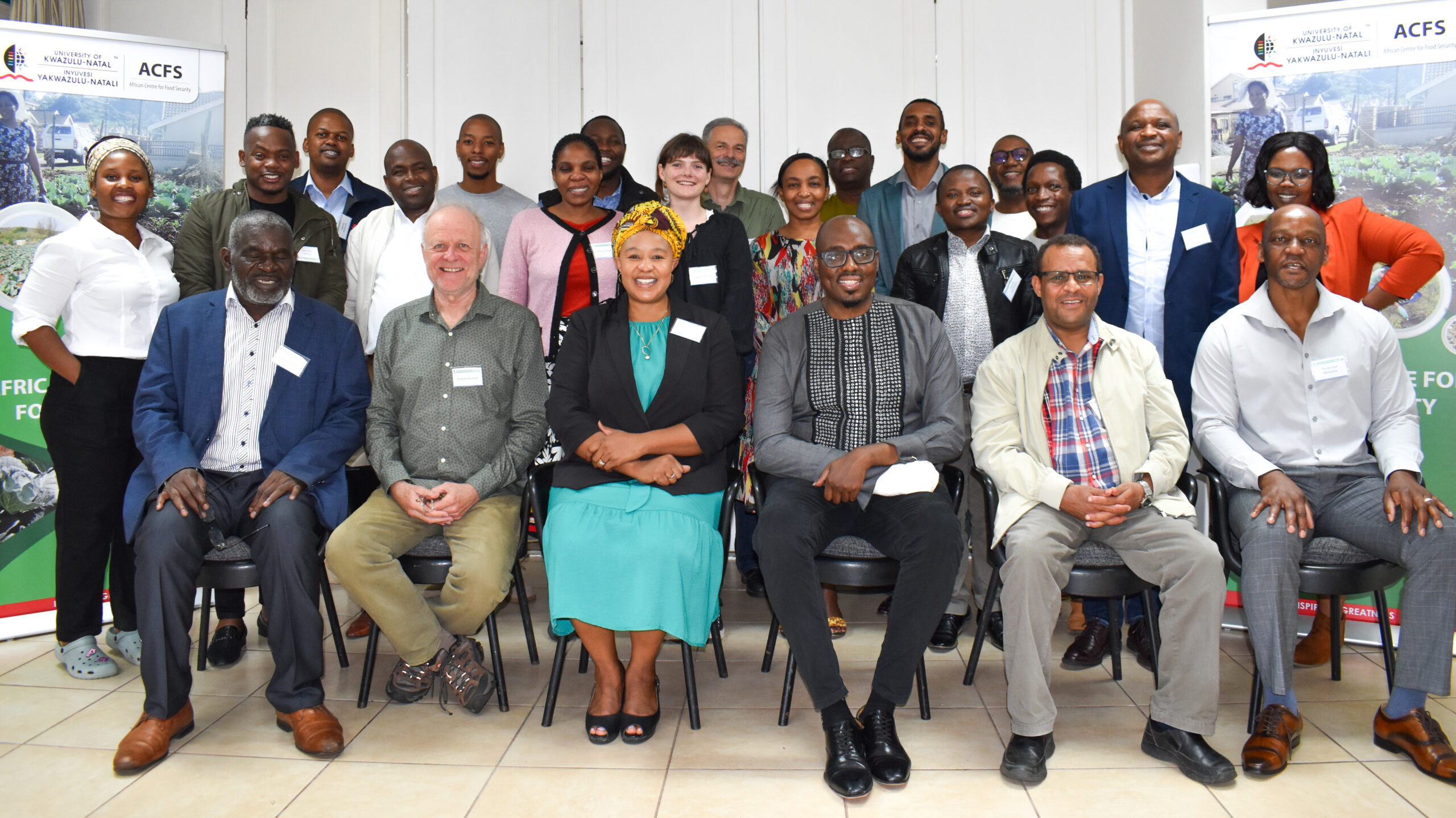
Culminating in a hybrid stakeholder engagement dialogue in Pietermaritzburg attended by more than 20 in-person guests, the programme was opened by ACFS Director Professor Joyce Chitja. Professor Ernest Khalima of UKZN’s College of Humanities facilitated the programme.
Attendees included ACFS Board members Professors Relebohile Moletsane, Paramu Mafongoya, and Stefan Schmidt, and Dr Thulasizwe Mkhabela; staff from UKZN’s Schools of Agricultural, Earth and Environmental Sciences (SAEES) and Life Sciences who are part of and engage with the ACFS; ACFS academic staff; and external partners and advisors. SAEES leadership lent their support through a message from Acting Dean Professor Julia Sibiya and the attendance of the Academic Leader of the Value-Adding Cluster in the School, Professor Muthulisi Siwela.
Chitja’s opening address focused on the problems posed by the food system pressure on food and nutrition insecurity, the complexities involved in tackling these, and the ACFS’s vision to provide the skills needed to solve these challenges in the future by aligning its offerings and strategy to societal needs and various stakeholders.
Professor Andrew Boraine, a partnering and systems change practitioner, outlined models to optimise stakeholder relations and governance.
Breakaway groups enabled the consideration of stakeholder management and strategies, after which participants reported on their discussions. Skilled facilitators synthesised the key points and highlighted common themes, innovative ideas, and potential action items.
With engagements emphasising the importance of partnerships for practical work in the transdisciplinary arena of food systems and FNS, a critical strategic approach for the ACFS will be partnering with its community, including students, as co-creators of knowledge through collaborative research problem identification, co-publication, and contributions to the development of the community and academic development of novice researchers.
The centre also aims to become more agile in its ability to operate innovatively and tailor its offerings for sustainability by responding to changes in the education sector, including blended online and contact teaching and learning, while pursuing innovative approaches.