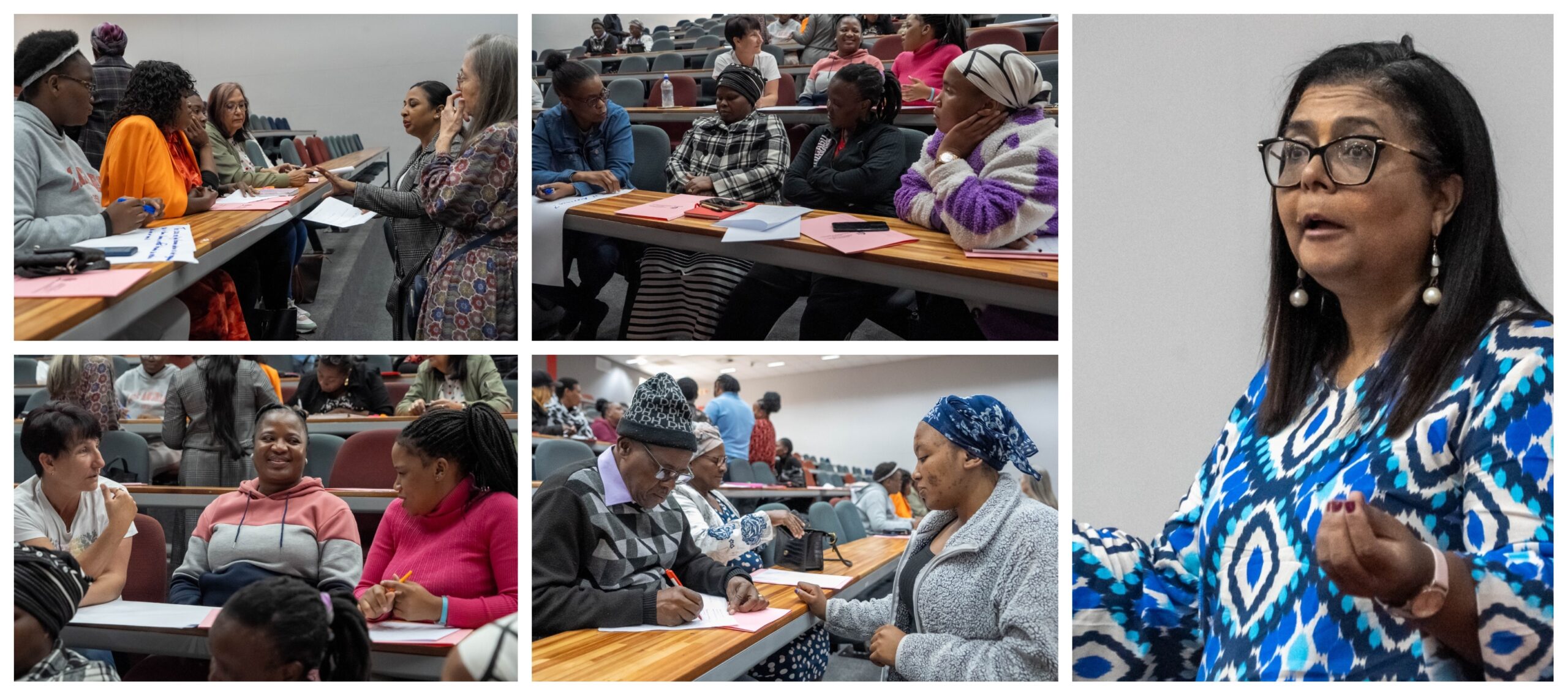
The Autism Awareness Campaign, #Commemorating Autism, organised by School of Education, UKZN’s Community Engagement Academic Leader, Associate Professor Angela James, focused on the knowledge, practices and intervention parents, teachers, and Early childhood development (ECD) practitioners are experiencing in engaging with young children with autism.
It was a gathering to raise awareness, address the challenges facing education, and offer parental support on a topic many find has been considered taboo.
James highlighted that autism is a rising special education need within communities, and parents and teachers have significant concerns. Considering that inclusive education encourages special educational needs and disabilities, intervention systems are necessary.
The programme featured all attendees participating in group discussions regarding their concerns and experiences and then two plenary sessions by Ms Nadia Bhayat, Action in Autism Director and Ms Fiona Khan, a PhD student at the University of KwaZulu-Natal.
For crucial collective learning experience purposes, sharing and growing for the enhancement of education with the communities, Bhayat provided an informative talk on understanding autism and therapeutic actions, including the services available at the School. She enlightened the attendees on the practical support, clinical symptoms and the various spectrums of the disorder. Autism in Action, officially in KwaZulu-Natal, is now an institution that offers intervention and vocational programmes for autism. Bhayat highlighted that symptoms of autism and attention deficit hyperactivity disorder (ADHD) can emerge at any age, being mindful of the genetic disposition and the environment.
Khan shared her experiences with a case study of early intervention by parents and educational and medical practitioners in a neurodivergent environment. Autism is not a disease nor a disability but a developmental disorder which has become more prominent in children. Her case study discussed a lived experience using verbal, aural, literacy and kinesthetic skills for intervention and the fantastic progress achieved through acceptance and love. The attendees enjoyed a reading strategy in storytelling, which Khan demonstrated.
Ms Nozipho Thwala, Principal of Mzameni Children Assessment and Remedial Centre, shared her experiences as an associate at an academic institution. Education and intervention strategies start from Grades 1 to 9, with vocational studies for 14-18 years. ‘Vocation activities include gardening, cooking, beauty salon, and coding and robotics.’
‘Our kids frequently experience delays in language and development, and we have speech and occupational therapists on staff that come twice a week to help.’
James commented positively about the insightful and honest sharing of problems and potential solutions for bettering the care of children with autism. She said, ‘Parents of children with autism found the event highly educational and beneficial, as did Early Childhood Practitioners.’ Parents were very vocal in asking the University to include them in short programmes and community engagement as they were relevant stakeholders presently and in the future. They want to stay informed and engaged and need the support to enhance their knowledge-based systems as lifelong learners.
‘A very worthwhile event with much learning and good participation,’ said Dr Nora Saneka.
‘Having to share our thoughts with other stakeholders was a great experience. I believe learning is infinite and getting involved in such platforms can make a difference in our teaching and also in helping parents and the community at large,’ added Thwala.
The awareness campaign drew exceptional support. James assured the participants there would be a follow-up meeting based on their responses.