KHULA Education, formerly the David Rattray Foundation, was founded in 2007 with a bold mission: to lift rural communities out of poverty through the power of education.
Operating primarily in the uMzinyathi District of KwaZulu-Natal, one of the most underserved areas in South Africa where child poverty rates reach 75-80%, KHULA’s work spans the entire educational journey, from early childhood development to post-school employment opportunities.
KHULA’s holistic, community-led model is built around four core programmes:
• Early Childhood Development – laying strong foundations in literacy, numeracy, and social skills in both isiZulu and English.
• Supplementary Teaching – delivering high-quality English and Maths support in under-resourced schools.
• Educator Development – training and mentoring teachers to inspire and lead in their classrooms.
• Skills and Employment – providing young people with digital literacy, vocational training, and pathways into employment.
KHULA now supports 22 schools across three clusters – Rorke’s Drift, Ncepheni, and Isandlwana – benefitting more than 6 450 children and young people in 2024 alone. Its cluster model enables deep, sustained engagement with schools and communities, ensuring progress is not limited by geography.
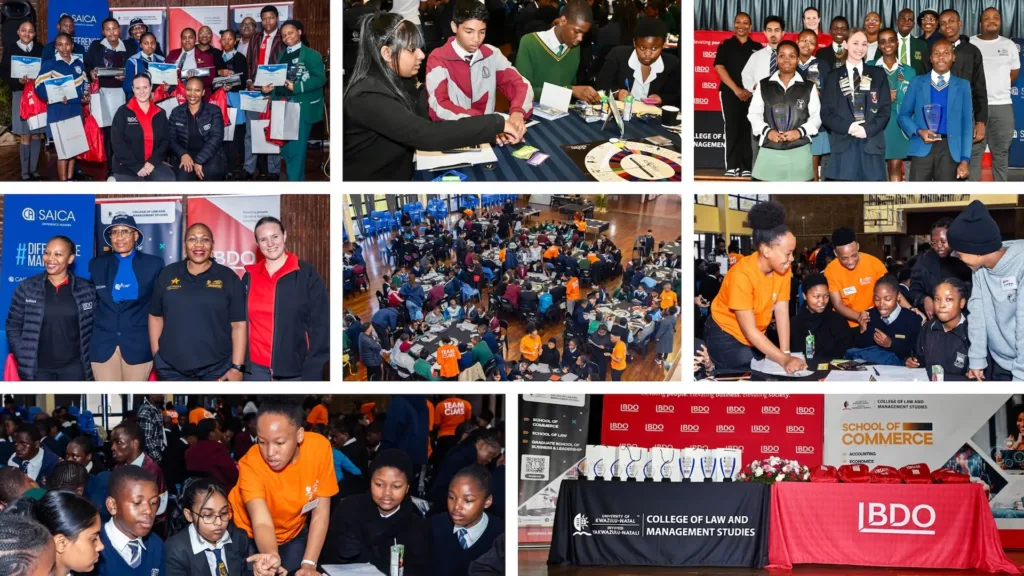
This year, the University of KwaZulu-Natal (UKZN) joined forces with KHULA Education in an inspiring initiative designed to ignite entrepreneurial thinking among Grade 7 learners in rural KwaZulu-Natal. Led by KHULA CEO Ms Debbie Heustice, the KidsMBA is more than a business education programme – it is a hands-on opportunity for young learners to see themselves as future innovators, problem-solvers, and entrepreneurs.
A multidisciplinary group of academics from UKZN’s School of Commerce – Dr Andrisha Beharry-Ramraj, Ms Nozipho Ntuli, Dr Christian Tipoy, Dr Michelle Hatch, and Dr Anyetei Ako-Nai – proudly supported KHULA in this year’s programme. The KidsMBA, an extension of KHULA’s skills and employment focus, introduces entrepreneurial skills to learners before they enter high school.
The project encourages critical thinking, creativity, and teamwork, while providing a practical framework for understanding the basics of running a business. For rural learners, many of whom have limited exposure to formal business concepts, the KidsMBA opens up possibilities they may never have imagined.
By the end of the programme, these Grade 7 learners are not only familiar with terms like ‘profit’, ‘marketing strategy’, and ‘cash flow’ – they are also confident in presenting their own business ideas.
The team from UKZN played a very important role in the project. Their role was to review business plans prepared by learners from six primary schools and to help ensure they are pitch-perfect for their upcoming Shark Tank-style presentations.
The following schools formed part of the programme: Mhlazane Primary School, Ncepheni Primary School, Mampunga Primary School, Isandlwana Primary School, Amoibe Primary School, and Oscarsberg Primary School. During each school visit, our team engaged in one-on-one sessions with small groups of six to eight learners. Each school typically had between eight and twelve groups in total. Working with one group at a time, each academic spent approximately 20 to 30 minutes per session, guiding learners in refining and strengthening their business ideas.
The sessions were both heart-warming and eye-opening. Beharry-Ramraj noted the learners’ creativity, with ideas ranging from environmentally friendly cleaning products to mobile tuckshops for remote communities. The team helped the learners refine their ideas by focusing on target markets, cost structures, and unique selling points.
Programmes like KidsMBA are especially important in rural areas such as the uMzinyathi District, where youth unemployment exceeds 80%, and many learners face barriers to further education and employment. The entrepreneurial mindset fostered by the KidsMBA gives learners the tools to create opportunities for themselves and their communities.
“It was humbling to see how smart, enthusiastic, and committed these kids are – how they worked on their projects and stayed focused on their studies despite the many challenges they face,” said Ako-Nai.
For KHULA, the KidsMBA is not an isolated project; it forms part of a broader strategy to ensure that learners leave school not only with academic knowledge but also with the confidence, skills, and networks needed to thrive in a rapidly changing economy.
UKZN’s collaboration with KHULA reflects its ongoing commitment to community engagement, capacity building, and applied learning. While the team was there to teach and mentor, they also learned from the learners’ ingenuity and resilience.
By partnering with organisations like KHULA, UKZN bridges the gap between academia and grassroots development. This partnership not only benefits the community but also offers staff valuable insight into the realities of rural education.