Three Norwegian associates at UKZN’s Department of Gynecology and Obstetrics are not only working to reduce perinatal mortality rates and teaching researchers to write scientific articles, but are also giving back to the community.
Since 2004, Professors Eva Tegnander and Sturla Eik-Nes have been involved in training midwives to use ultrasound machines in KwaZulu-Natal health clinics. They also direct the Umoja project that aims to develop a user-friendly prototype 2 ultrasound machine that is based on a smart tablet to assist midwives in their work and improve pregnancy care. Since 2013, Sturla’s wife, Professor Nancy Eik-Nes, has helped registrars and younger researchers to improve their scientific writing skills. They all are affiliated to the Norwegian University of Science and Technology in Trondheim, Norway.
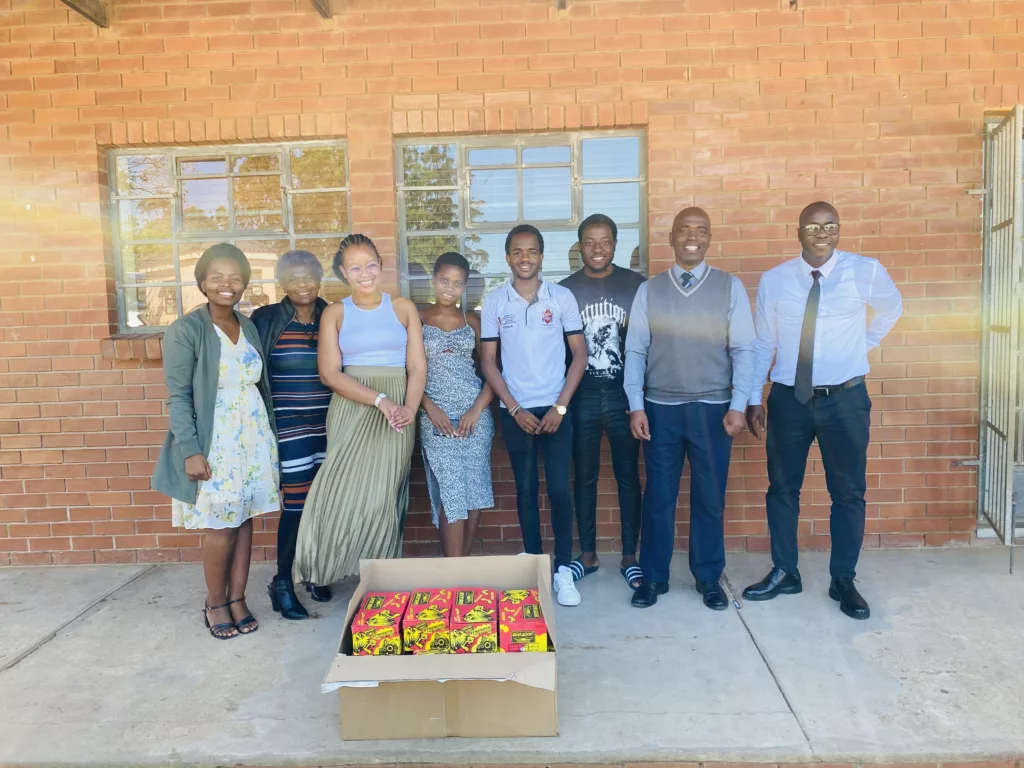
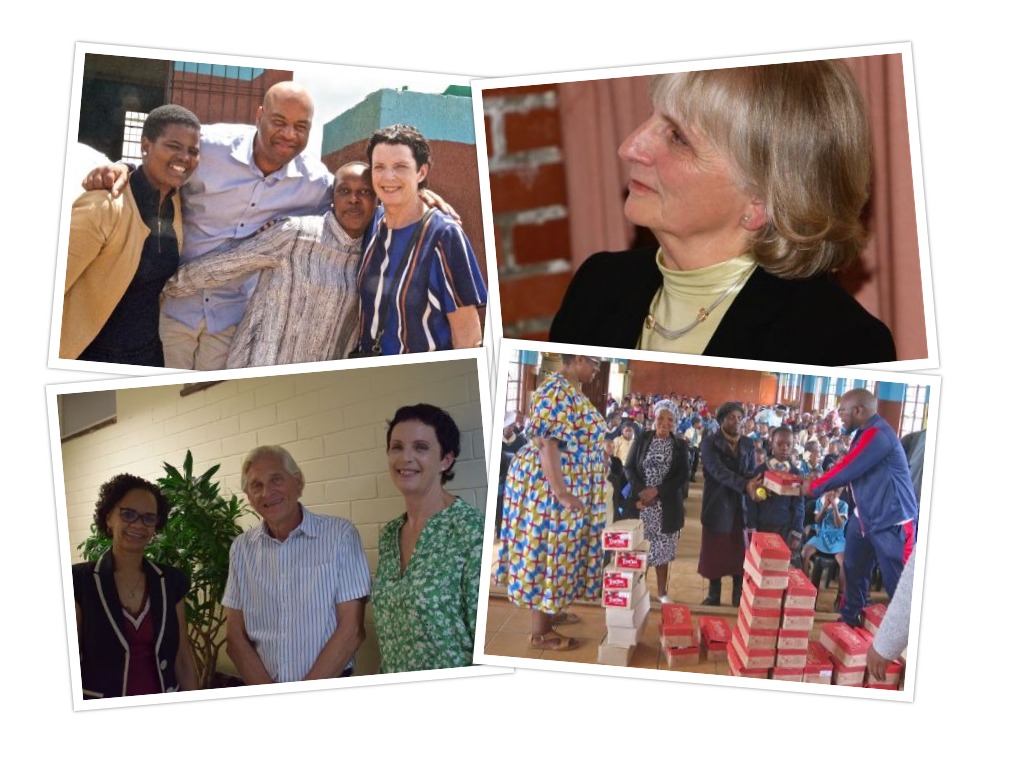
In the course of their work, they shared ideas with local community member and taxi driver Mr Sipho Patric Dlamini. Dlamini has been their driver since 2004 and they have developed a lasting friendship. Dlamini has always dreamt of giving back to his community. The four developed ‘Patric’s Charity Foundation for Noodsberg Primary School’ which donated 100 pairs of shoes and 200 pairs of socks to learners.
Sturla said their work in KwaZulu-Natal was influenced by the Scandinavian model for using ultrasound. In Norway, midwives offer routine ultrasound examinations to all pregnant women at week 18. Sturla pioneered routine scanning in Norway in the late 1980s. Tegnander who is also a midwife, then developed formal university-based ultrasound training of midwives. Experience has shown that, rather than ultrasound examinations being restricted to private practices in large cities, they should be extended to all pregnant women in peripheral/rural areas in order to reduce perinatal mortality.
Based on their work over time, the Norwegians have suggested different organisational models for rural areas. One is the ‘Empangeni model’, which involves a large hospital, Lower Umfolozi District War Memorial Hospital (LUDWMH), that is surrounded by several primary health clinics. Five of the 13 midwives that were educated there in 2011/2012 now work at five surrounding primary health clinics. They scan all pregnant women attending the clinics and refer special cases to the LUDWMH.
An encouraging result is fruitful co-operation between the hospital’s sonographers and the midwives. The midwives identify cases to be further evaluated by the sonographers and gather basic information such as the precise gestational age and estimated time of delivery, twins, location of the placenta, etc. This has reduced the sonographers’ workload and resulted in more rational use of the skills of all parties.
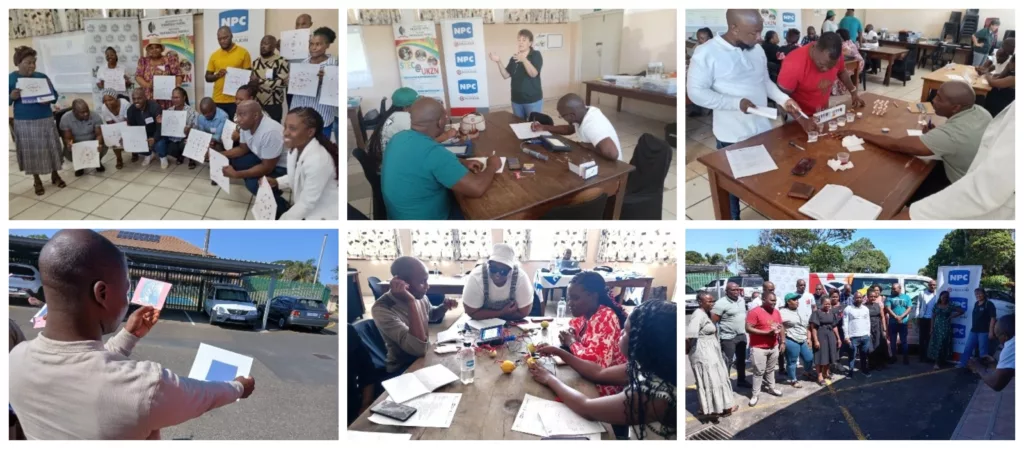
At the Nelson R Mandela School of Medicine, Nancy has continued the work she initiated in 2013, providing courses and workshops on scientific writing, as well as working one-on-one with those preparing protocols, articles for publication and PhD theses. Her co-operation with students and staff continues beyond her visits to South Africa and has resulted in young South African researchers being published in scientific journals.
“It has been a true privilege to be able to participate in various activities that hopefully are of benefit to staff, students and, ultimately to the patients who are affected by the work at the School of Clinical Medicine. The shoes and socks project has deeply touched our hearts. The overwhelming response from the parents and the children made us decide to make this an annual event.”