The John Langalibalele Dube Institute at UKZN is skilling and providing employment for rural women and youth in KwaZulu-Natal.
The Institute’s core business is land research and capacitating rural unemployed women and youth with critical skills, knowledge and resources to re-enter the job market.
It is currently running projects for 400 unemployed rural women and youth in cotton, organic fruit and vegetable farming, early childhood development, maritime skills (commercial diving) and aviation (private pilot course).
John Langalibalele Dube Institute Chief Executive, Ms Thandi Ngcobo, said the organisation’s research on land claims revealed the need to use land for food security and skill rural women and youth. “We need to use the vast land and there are a number of people sitting at home [that] are willing to learn. We realised that if we give you land, what are you going to do with it? We decided to capacitate rural women. There are currently four projects, all funded by the Department of Labour’s Unemployment Insurance Fund (UIF), that target people who have contributed to the Fund and are currently unemployed,” said Ngcobo.
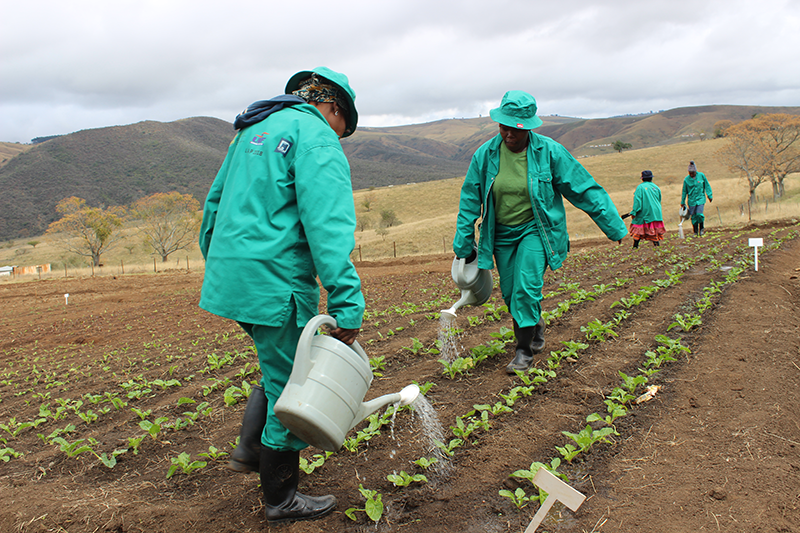
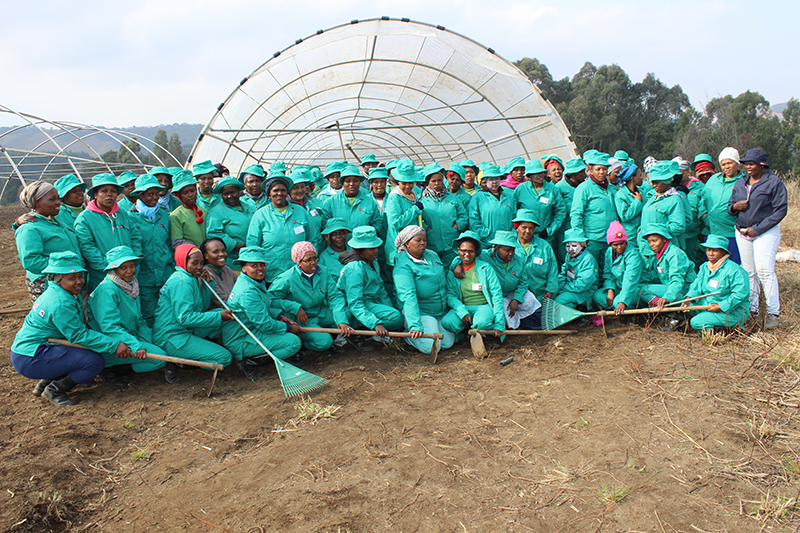
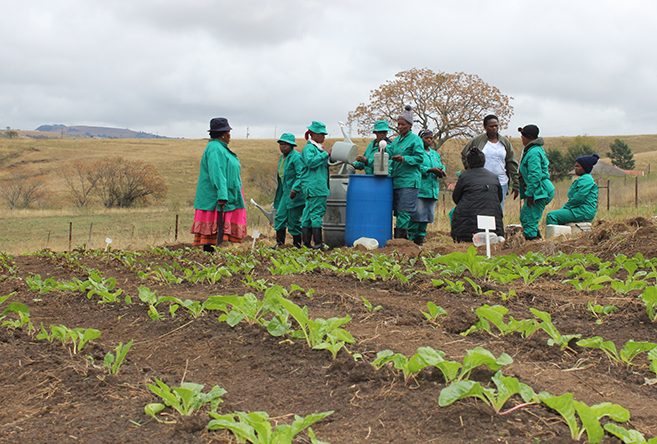
Since November 2017, 100 women at Emadungeni near High Flats in Ixopo, have been attending training to farm organic fruit and vegetables which will be supplied to Woolworths and Pick n Pay.
“After completing their studies in business management, financial management and business ethics, the women will go for practical training on how to farm. The local chief has loaned us 20 hectares of land to train the women who are in 10 groups and will be registered as cooperatives. They will be monitored for two years,” Ngcobo said.
She noted that the demand for organic food has increased as people become more aware of the need to live healthy lives.
Another 100 women are receiving training in early childhood development in Zululand. “They will receive an NQF level 5 qualification after training in basic foundation teaching. They are also being educated on the Child Care Act and first aid. Each woman receives educational books and toys to open their own crèches and educational centres in their area. We realised that there is a lack of early childhood development in our communities. The first seven years of a child’s life is very important,” said Ngcobo.
In Impendle in the KZN Midlands, 100 women will be involved in cotton farming and production; with one group growing the crop, another ginning (separating the cotton fibres from the seeds), and others creating yarn, dyeing and weaving it. “The plan is to supply the fabric to co-operatives that make uniforms for no-fee schools in South Africa. Harvesting of cotton takes place in October, so the women will also plant beans and strawberries,” said Ngcobo.
Ngcobo observed that people know what to do with land, but lack modern skills and technology. “Food security is a big issue. Women can farm and sell their goods at the market to earn an income. We need to take more people out of the grant system and channel that money to health and education,” she said.
In the youth programme, 50 young people are being trained as pilots in partnership with the Department of Transport with another 50 receiving training in commercial diving and learning how to do underwater welding and plumbing and how to build ships underwater as part of Operation Phakisa.
Ngcobo said that the Institute’s objective is to develop community-based programmes that equip women and youth from rural areas to be employers of tomorrow as opposed to being employees. Another five projects are in the pipeline. “Over the years, the Institute has been involved in various projects that have taught us how to find common ground to ensure that communities, government and the private sector work together. The best approach to achieving project goals and objectives is when the intended beneficiaries benefit through participation and proper engagement.”
*UKZN’s Dr John Langalibalele Dube Institute was established in 2015 with a special focus on land research and community development programmes which include skills and capacity development.
The Institute’s approach to education is promoting sustainability and security through learning programmes designed to improve productivity and performance in the job market as well as the business sector. Its ultimate goal is to enhance employability and enable entrepreneurship.
The organisation is strategically positioned to offer skills development programmes ranging from short courses of three to twelve months to certificate or diploma courses.