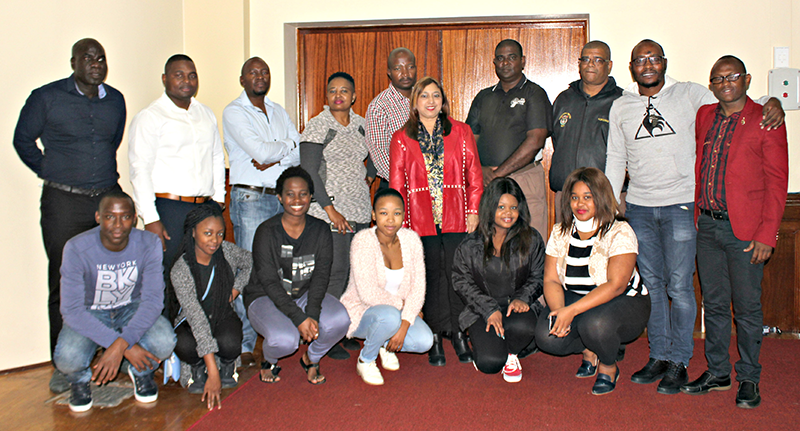
An innovative partnership between the University and the Department of Correctional Services is bearing fruit for both students and offenders.
Criminology and Forensic Studies (CFS) students at UKZN are gaining first-hand experience of the workings of correctional facilities thanks to a Memorandum of Understanding between the Department of Correctional Services (DCS) and the University.
In the agreement, UKZN is represented by Professor Sultan Khan of the School of Social Sciences and Professor Shanta Balgobind Singh, academic leader of Criminology and Forensic Studies in the School of Applied Human Sciences.
Singh, who is the Academic Leader of Criminology and Forensic Studies, said that the aim of the three-year project, which was launched in 2015, is to provide students with an overview of community profiling and to assist them to understand the correctional environment.“CFS students are encouraged to volunteer on the criminology profiling learning programme. The Experiential Learning programme is important for students as it improves their learning and experience by providing a community service as well as boost their curriculum vitae,” she said.
Singh said the MoU was in the process of being renewed for another five years.Both students and academic staff would be provided with the opportunity to conduct comparative research on identified and relevant contemporary issues in partnership with the Department. “The Department of Correctional Services provides training to post graduate students on how to conduct assessments. Mentors, identified in correctional centres, supervise and coach the students to ensure that there is compliance with the department’s policies and procedures, rules and regulations,” said Singh, adding that the partnership also assists the Department with assessments, profiling and Correctional Sentence Plans (CSPs) and presenting correctional programmes to sentenced offenders.
“The compilation of the CSP will indicate which rehabilitation programmes are suitable for the specific offender,” said Singh.
She said students overcame being fearful around inmates, gained more knowledge on how the correctional system works and gained an understanding of workplace confidentiality and professionalism as well as integration from prison to correctional institution.
In terms of future plans, the project will work to improve the quality of life of offenders, identify resources in communities for offenders, develop better liaison with relevant organisations within the community, establish and maintain arrangements and linkages with services providers in order to address the social reintegration needs of offenders and ensure effective delivery of integrated services and programmes to offenders.
Words: Taschica Pillay
Photograph: Melissa Mungroo