Enactus UKZN is helping to make a difference by working side-by-side with communities to create entrepreneurial and sustainable solutions.
Enactus UKZN is a community of student, academic and business leaders. Launched in 2003 with three members and two projects on one campus, today it boasts a membership of close to 200 UKZN students on four of the University’s campuses. Projects span agriculture, education, renewable energy and food security initiatives.
Among the current projects are Aloe Go, Sack Space Farming, Pallet Project, Jonga Phezulu Agri-Hub Farming Programme as well as Cleanville.
Aloe Go
Aloe Go started in April 2017 after the team identified the need to address hygiene related skin conditions caused by water scarcity in the Nquthu area of northern KwaZulu-Natal. The team identified aloe ferox- which grows naturally in dry, hot and arid weather conditions- as a possible solution. The plant’s healing properties are suitable for skin conditions such as eczema, ring worm and acne.
Project Manager, Miss Siphephelo Mnyandu, said after a site visit, the team worked with Professor Werner van Zyl of UKZN’s Chemistry Department, and Master’s student, Mr Emmanuel Mkumbuzi, to produce an aloe ferox soap formula.
“The soap formula is now being tested in the Micro-biology Department to establish how effective it is in treating the skin conditions. It will thereafter go to the South African Bureau of Standards after which it will be ready to be sold,” says Mnyandu. She adds that while the aim is to improve skin conditions in the area, the project will create employment and transfer skills to the youth. The team has been in communication with the local Economic Development office which they hope will endorse the project.
Project Cleanville
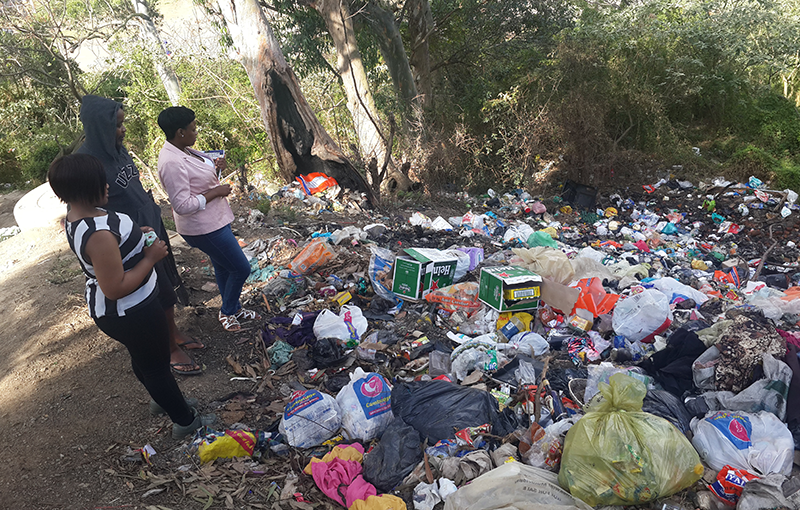
Project Cleanville focuses on Kenville, north of the Umgeni River, which is densely populated with largely informal settlements and is surrounded by industrial firms.
Enactus Deputy President, Ms Samkelisiwe Mkhiz, says the waste problem in the area is largely due to poor road infrastructure which makes it difficult for Durban Solid Waste trucks to access. “The community has resorted to dumping waste into pits in the area which is unhygienic and can cause diseases. We found that a large percentage of the waste was plastic and looked at ways of disposing it as most of it is non-biodegradable,” she said.
After conducting research, the team learnt of a process called pyrolysis which involves burning plastics in a chamber in the absence of oxygen through a process that will eventually produce crude oil. “We want to reduce the plastic waste within the community by building a plant. This plant will process plastics which will be cleaned, sorted and sold to different recycling companies.”
Mkhize says that thus far, they have conducted research into pyrolysis, submitted proposals and applications for funding and have been networking in an attempt to find stakeholders to work with.
“The team has spoken to the eThekwini Municipality to provide trash bags in the area.”
Jonga Phezulu Agri-Hub Farming Programme
Jonga Phezulu aims to reduce and prevent student hunger. According to research, at least three out of every 10 students at UKZN is vulnerable to food insecurity. The Jonga Phezulu team aims to invest in student capacity building and skills enhancement to ensure shared work, shared food and shared learning.
The Jonga Phezulu Agri-Hub Farming Programme intends to cultivate a culture of sustainable
food production using a variety of innovative farming technologies; namely aquaponics and hydroponics. It seeks to involve and significantly impact a wide range of students from different faculties through skills transfer and their direct involvement in every aspect of the programme.
Spaces on campus are being used to produce food which is packed and sold on the commercial market with the income generated used to sustain the project. Some of the vegetables are packed into food baskets, together with non-perishable items, and distributed to the most vulnerable students identified by the University. “The Programme is a unique solution supported by executive management of the University and the SRC and employs a multi-pronged business approach which encompasses agricultural innovation and aggressive fundraising. Jonga Phezulu is positioned perfectly to advance the current strategic direction of the University,” says Kwazini Zulu, Enactus UKZN Executive President.
Sack Space Farming
The Sack Space Farming project – one of the cheapest forms of vertical farming – was launched to create sustainable agribusiness in communities by implementing the “one home, one agribusiness” concept. The project seeks to create partnerships in various communities; making beneficiaries capable of supplying different vegetable crops to markets and achieving food security.
The team would like to foster relationships with the Farmers Support Group and UKZN’s Agriculture Department to ensure that participants remain up to date with new and better farming techniques.
Pallet Project
The Pallet Project helps skill and reintegrate rehabilitated offenders into society. When rehabilitated offenders are released, most struggle to use the skills gained due to limitations related to finance, equipment, resources as well as social stigma which prevents them from gaining employment.
The project collects redundant pallets from local businesses and offers them to rehabilitated offenders with dormant carpentry skills. They use their skills to make an income and this dissuades them from further criminal activity.
Mr Siyabonga Ntuli, a rehabilitated offender from Klaarwater who gained carpentry skills in Sevontein Correctional Centre, started working with the project. The team would like to partner with the Department of Correctional Services to identify willing rehabilitated offenders with carpentry skills. They hope to create a successful business or outlet which will be independently run by beneficiaries.
Words: Taschica Pillay
Photographs: Supplied