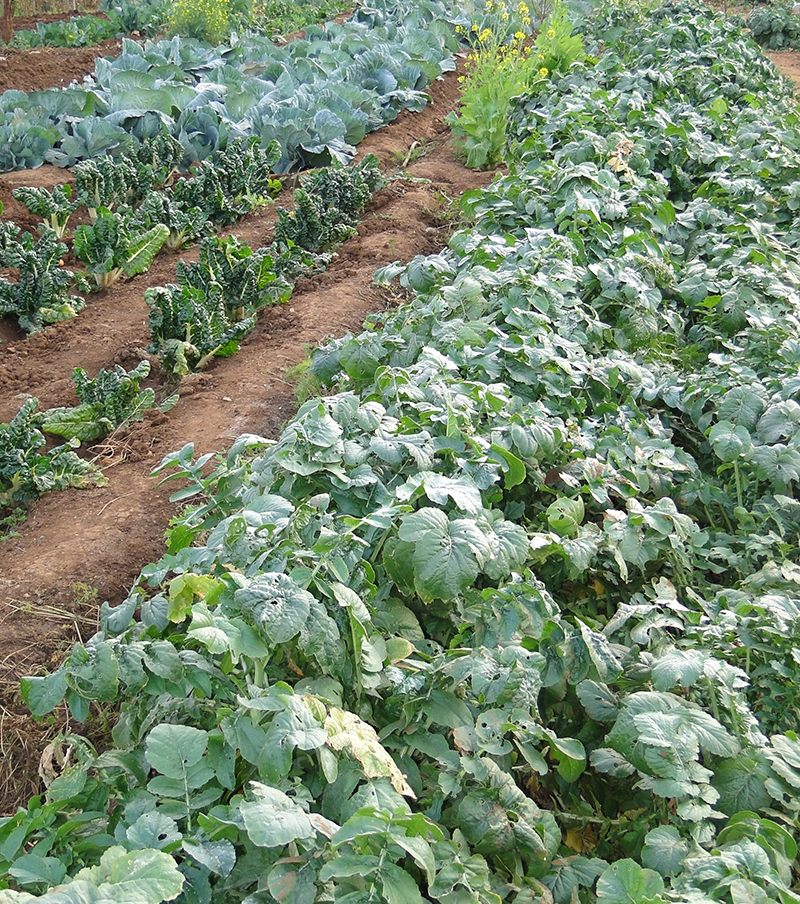
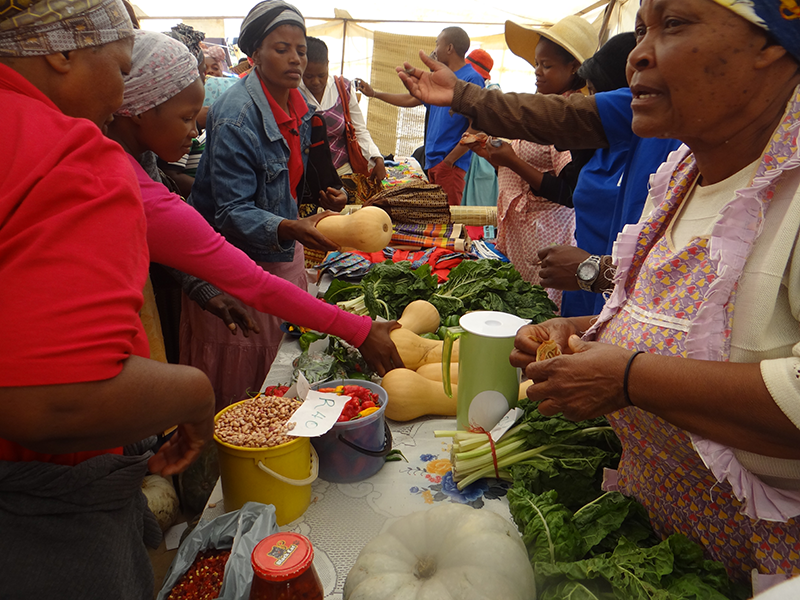
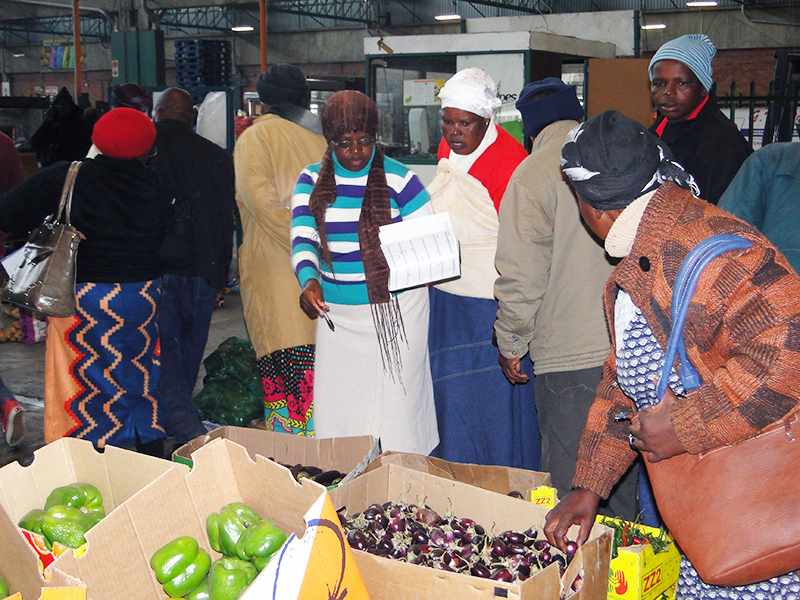
The Farmer Support Group is developing sustainable ways to improve rural farmers’ production and market systems.
Research conducted in Bergville in KwaZulu-Natal and Eden in the Western Cape by the Farmer Support Group (FSG), a community development and outreach unit of UKZN and Western Cape NGO, Southern Cape Land, revealed that smallholder farmers’ level of agricultural production does not meet formal market demand.
Farmer Support Group researcher and project co-ordinator, Avrashka Sahadeva from UKZN’s School of Agriculture, Earth and Environmental Sciences, said, “This research focused on agrarian transformation using participatory approaches. The two organisations that collaborated in the project were already working in the respective sites. Experience had shown that smallholder farmers experienced limited access to services which affect their participation in the agricultural market.”
Ms Nonhlanhla Mthembu, FSG Senior Project Facilitator, outlined challenges confronting smallholder farmers. “For starters, the farmers’ current level of agricultural production does not meet the market demands. In addition, transport is limited and there is lack of bargaining power and trust between buyers and producers. Land, water access, capital and lack of resources and infrastructure affect levels of supply.” ‘Buy-locally’ centred markets and a local fresh produce market were rolled out for the farmers.
The research emphasised the need for a collective approach to access to the resources required for agrarian transformation, namely, land, seeds and water. The Radical Agrarian Socio-Economic Transformation (RASET) programme which government developed to enable smallholder farmers to access markets could be an ideal vehicle to address these needs. FSG’s current work seeks to facilitate these farmers’ effective participation in the RASET programme once it is rolled out.
The FSG was established in 1985 and focuses on poverty alleviation in disadvantaged communities with a focus on women and youth. The group engages, capacitates and empowers smallholder farmers through participatory approaches and local activism to manage natural resources sustainably for improved livelihoods.